Semana Santa and Feria de Abril in Seville 2027: Dates and Routes
Semana Santa runs 21 to 28 March 2027 and the Feria de Abril 13 to 18 April. How the processions and casetas work, the official routes, transport and hotels.
The short answer. The Feria de Abril in Seville runs from Tuesday 13 to Sunday 18 April 2027, six days in the Real de la Feria in Los Remedios, according to the city’s tourist office Feria guide. Semana Santa, the Holy Week processions, comes first and runs from Palm Sunday, 21 March, to Easter Sunday, 28 March, according to the city’s tourist office guide. The fair follows two weeks later. Both fall on fixed dates that the Easter calendar sets, so hotels in the centre and near the fairground are worth booking as soon as your plans are firm. This page covers how each event works, which official pages to use for times, and what else is open.
The tourist office marks its guides as subject to change, and the Feria guide flags several pages (the portada, tours, the Caseta de Turismo and bus fares) as waiting for a 2027 update.
The dates
| Event | 2027 | Source |
|---|---|---|
| Viernes de Dolores and Sábado de Pasión | 19 and 20 March | Tourist office guide |
| Domingo de Ramos | 21 March | Consejo de Hermandades |
| Easter Sunday (Domingo de Resurrección) | 28 March | Tourist office guide |
| Feria de Abril | 13 to 18 April, Tuesday to Sunday | Tourist office Feria guide |
The Feria guide says the fair starts two weeks after Semana Santa and lasts six days. It also says the fair opens on the Monday night with the lighting of the fairground, so you’d expect the alumbrado on the evening of Monday 12 April. The guide doesn’t print that date, so confirm it on the Ayuntamiento’s pages closer to the time.
Semana Santa: how it works
Seville’s Holy Week is made up of 60 hermandades (brotherhoods), each with its own image of Christ or the Virgin, and more than 100 pasos, the floats that carry them, according to the tourist office guide. Each brotherhood leaves its home church on its day, walks to the cathedral and returns. Several leave at similar or consecutive times from different parts of the city, so you’ll have to choose which to follow each day. The tourist office suggests arriving early for a good view and carrying the printed programme.
A few terms you’ll hear:
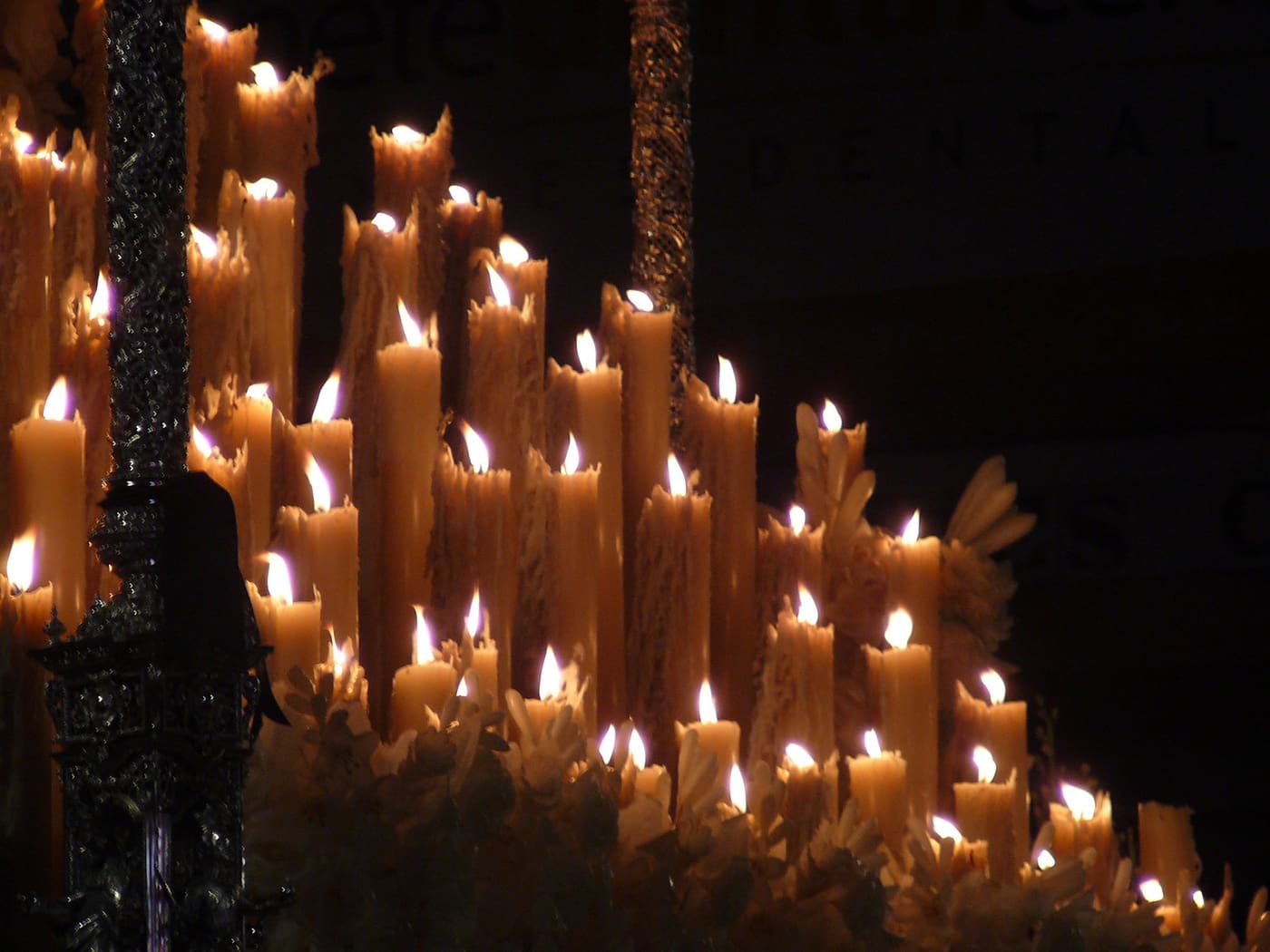
- Nazarenos are the hooded penitents. They carry lit candles or a cross.
- Pasos come in three kinds. A paso de misterio shows a scene from the Passion. A paso de Cristo carries one figure of Christ. In most brotherhoods a paso de palio follows, with the Virgin under a canopy held by twelve poles.
- Costaleros carry the floats on their necks, and a capataz directs them.
- Saetas are flamenco prayers sung to the images from balconies.
The carrera oficial
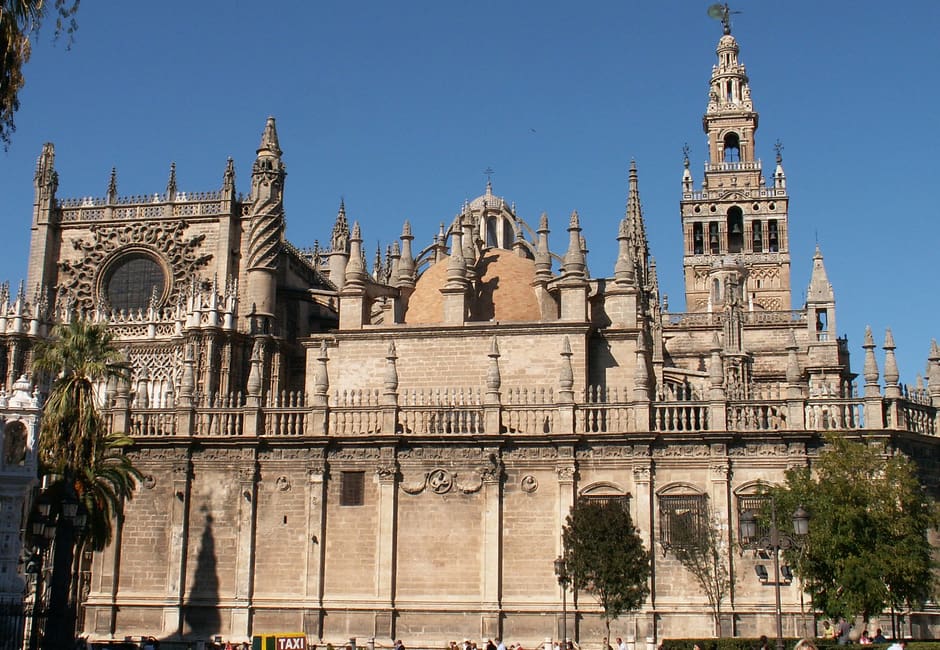
Every brotherhood has to pass through one fixed stretch of the centre called the Carrera Oficial. The tourist office describes it as running from Plaza de la Campana along Calle Sierpes and Plaza de San Francisco, then along Avenida de la Constitución and into the cathedral by the Puerta de San Miguel. The brotherhoods leave by the Puerta de los Palos onto Plaza Virgen de los Reyes. Chairs along this route are rented, either for the whole week or for single days, and prices depend on the position and the day. The Consejo’s site has a “Sillas y Palcos” section with regulations, deadlines and prices, so check it for 2027 rules rather than relying on a third party.
The same guide says the images go through the narrow streets of the old town on the way to the cathedral, so you can also watch near a brotherhood’s home church or along its route. The tourist office publishes a suggested walking route, linked from its guide.
Which brotherhoods on which day
The Consejo has approved the order of passage through the Carrera Oficial for Palm Sunday and for Wednesday, Thursday, the Madrugá and Good Friday. Exact start times for each brotherhood are in the official timetable, called “Horarios y Recorridos” on the Consejo’s site.
| Day | Order in the Carrera Oficial |
|---|---|
| Palm Sunday | Entrada en Jerusalén, Jesús Despojado, la Cena, la Hiniesta, la Paz, San Roque, la Estrella, la Amargura, el Amor |
| Wednesday | El Carmen, la Sed, San Bernardo, el Buen Fin, la Lanzada, las Siete Palabras, el Cristo de Burgos, el Baratillo, los Panaderos |
| Thursday | Los Negritos, la Exaltación, las Cigarreras, Montesión, la Quinta Angustia, el Valle, la Pasión |
| Madrugá | El Silencio, el Gran Poder, la Macarena, el Calvario, la Esperanza de Triana, los Gitanos |
| Good Friday | La Carretería, la Soledad de San Buenaventura, el Cachorro, la O, San Isidoro, Montserrat, la Sagrada Mortaja |
The Madrugá is the night from Thursday into Good Friday. The Basílica de la Macarena in La Macarena and the Capilla de los Marineros in Triana are the home churches of the Macarena and the Esperanza de Triana.
Before and after
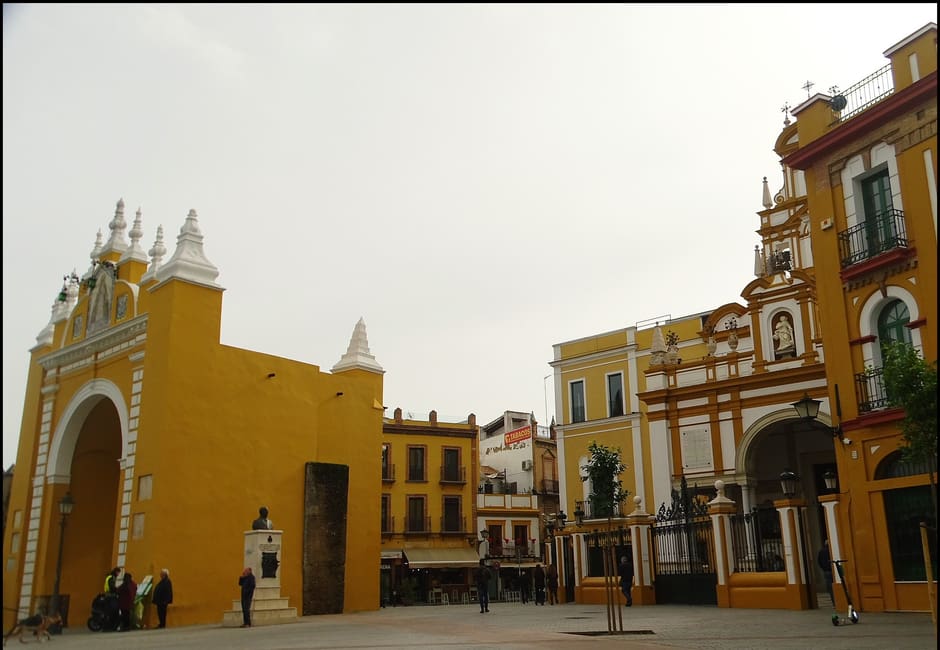
On the Friday and Saturday before Palm Sunday six brotherhoods go out on Viernes de Dolores, and more on Sábado de Pasión. They’re younger brotherhoods from outer districts such as Heliópolis, Pino Montano and Bellavista. The tourist office says they walk around their own neighbourhoods and don’t go to the cathedral. On Easter Sunday the Resurrección brotherhood leaves the church of Santa Marina. Saturday has its own set, including the Santo Entierro.
Feria de Abril: how it works
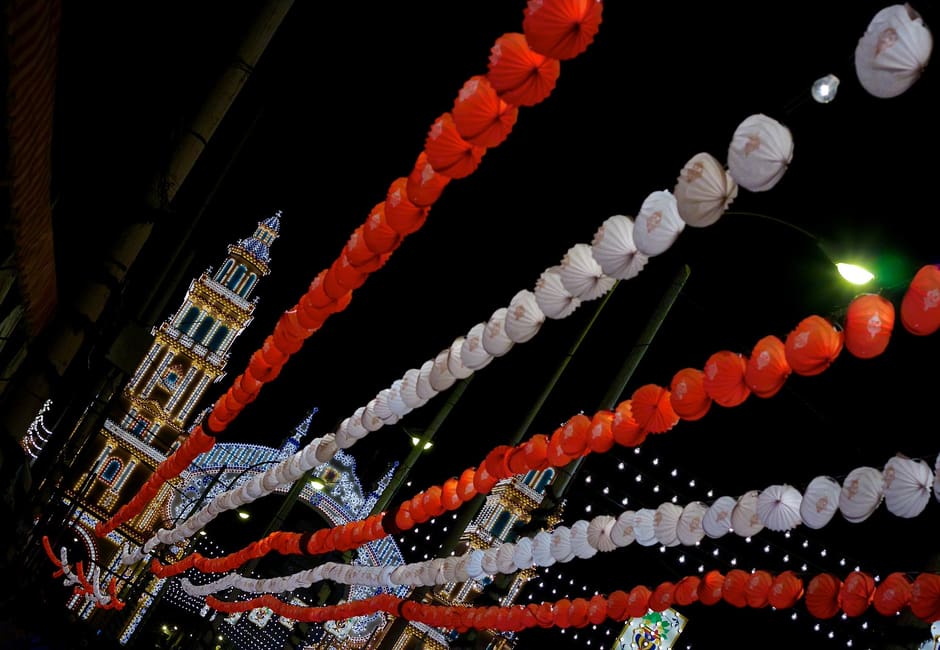
The fair is held in the Real de la Feria in Los Remedios, on the Feria de Abril fairground. It moved there in 1972, after the earlier site at the Prado de San Sebastián, the tourist office’s history notes. The streets are covered in albero, the golden earth used in Seville’s plazas and bullrings, and lit by paper lanterns. Streets are named after bullfighters.
Casetas
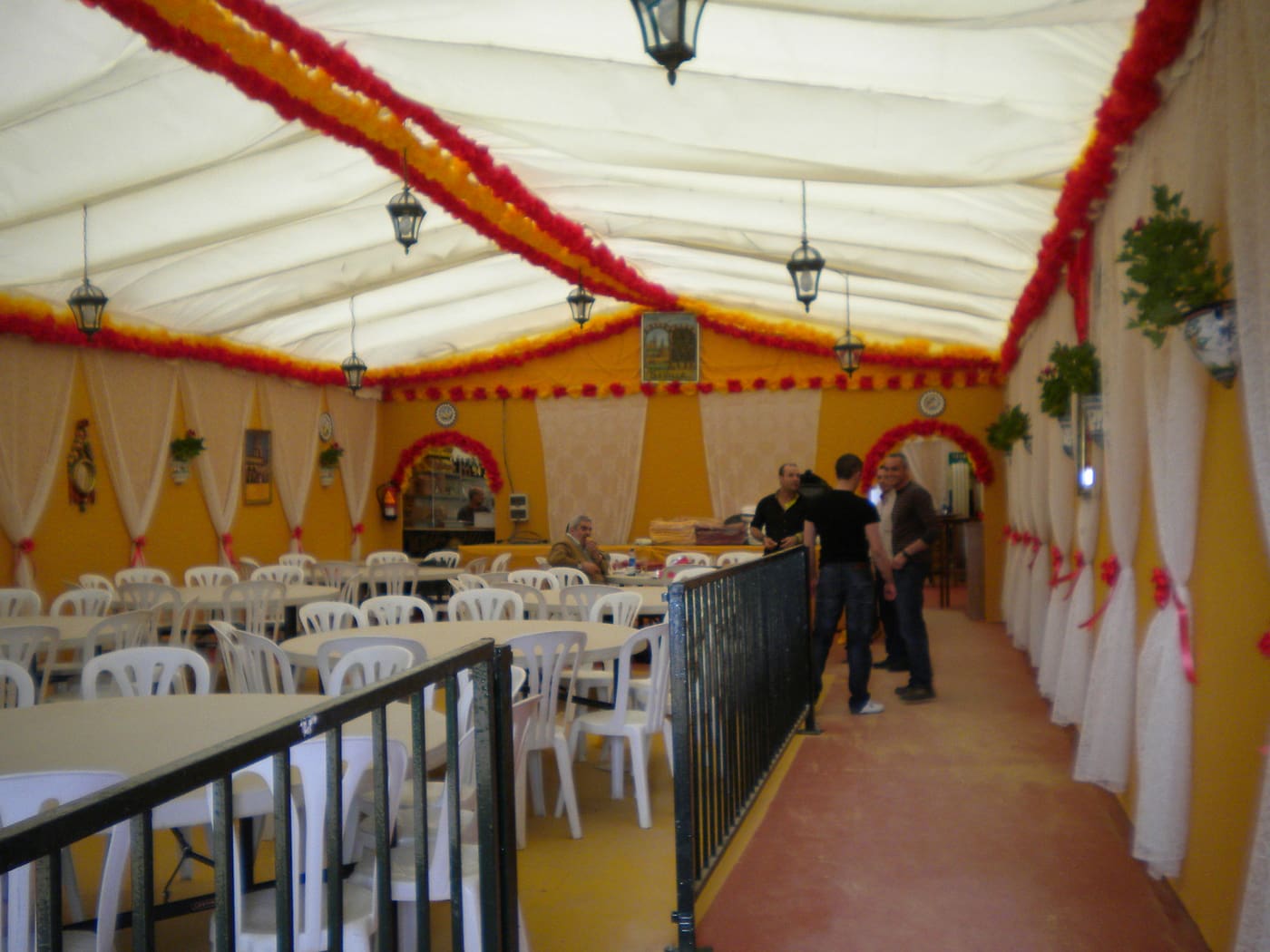
More than a thousand casetas stand along the streets. They’re striped tents with a front area for tables and dancing and a back area with kitchen, bar and toilets. Most belong to families, clubs, companies and associations, and they’re private. The tourist office says district casetas have free entry, and advises going with a Sevillano who can take you round their friends’ casetas.
Public casetas close at 3:00 and play only rumbas and sevillanas, according to the guide. Its list includes the tourist office’s own Caseta de Sevilla at Pascual Márquez 225 to 229, whose terrace needs a booking, and the municipal caseta at Pepe Luis Vázquez 53. Each of the city’s district casetas has its own street address in the guide, and so do several union and party casetas. The guide also advises carrying cash, because some casetas use vouchers bought for each drink.
Day and night
The day fair starts around 14:00 and runs to 19:00, when the horses and carriages leave the streets. The paseo de caballos is the sight of the day, with riders in short jackets and wide-brimmed hats and horse-drawn carriages. From about 20:00 the night fair takes over, and the guide says the mood changes again when the bullfights end around 21:30. Lunch is late, and it doesn’t start before, between 15:00 and 16:00, because the Monday to Friday of Feria week are working days in the city.
The official dress advice is smart and comfortable. Men usually wear a jacket and tie and women often wear the flamenca dress, but it isn’t required, and you’ll see plenty of ordinary clothes too.
The alumbrado and the Calle del Infierno
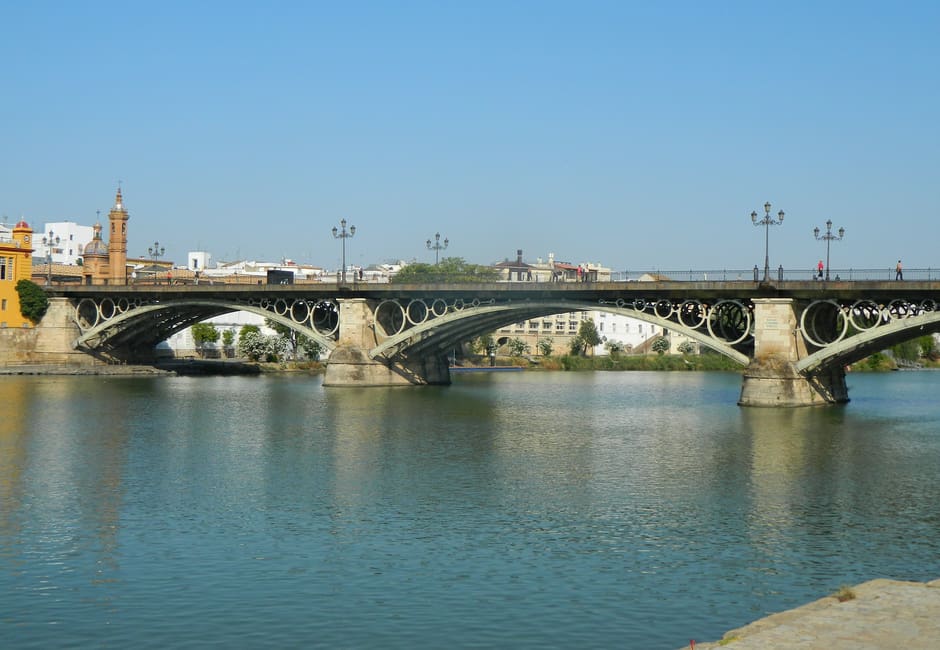
The alumbrado is the lighting of the portada, the gate at the entrance, and the fairground, with more than 200,000 LED bulbs according to the guide. The guide says the portada is dedicated to a different Seville monument each year. Its 2027 portada details were flagged as waiting for an update, so look them up nearer the date. The fair ends at midnight on the Sunday with fireworks on the Guadalquivir, and the guide suggests the Triana Bridge and its surroundings for a view.
The Calle del Infierno is the funfair beside the Real, named for the volume of its music and noise. A circus tent stands at the end of it.
Getting there
The tourist office advises against driving. It lists TUSSAM shuttles from the Prado de San Sebastián and lines 5, 6, 41, C1 and C2. Metro de Sevilla Line 1 serves the fair from Plaza de Cuba, Parque de los Príncipes and Blas Infante. Taxis and ride-hailing have special access and different fares during the fair. The tourist office also runs a guided one-hour walk of the Real from the portada kiosk, and its Castillo de San Jorge office is closed from Tuesday to Sunday of Feria week.
Hotels and what to book early
Both events are fixed to the Easter calendar and the dates are known months ahead, so you aren’t waiting for an announcement before booking.
For Semana Santa, the processions run through the historic centre, and the brotherhoods you’ll see on the Carrera Oficial pass between the cathedral, Sierpes and Plaza de la Campana. Santa Cruz, Centro and El Arenal put you on foot from most of it. Triana is across the river, which suits the Esperanza de Triana but adds a bridge to every other procession. For the Feria, Los Remedios is next to the fairground, and the Line 1 Metro and the shuttles link it to the centre. See where to stay in Seville for the areas in full.
Things you’ll want fixed before you go:
- Hotel and apartment rooms, for the dates above.
- Rented chairs on the Carrera Oficial, if you want a fixed seat, through the Consejo’s Sillas y Palcos pages.
- A table on the terrace of the tourist office’s Caseta de Sevilla, which the guide says requires a reservation.
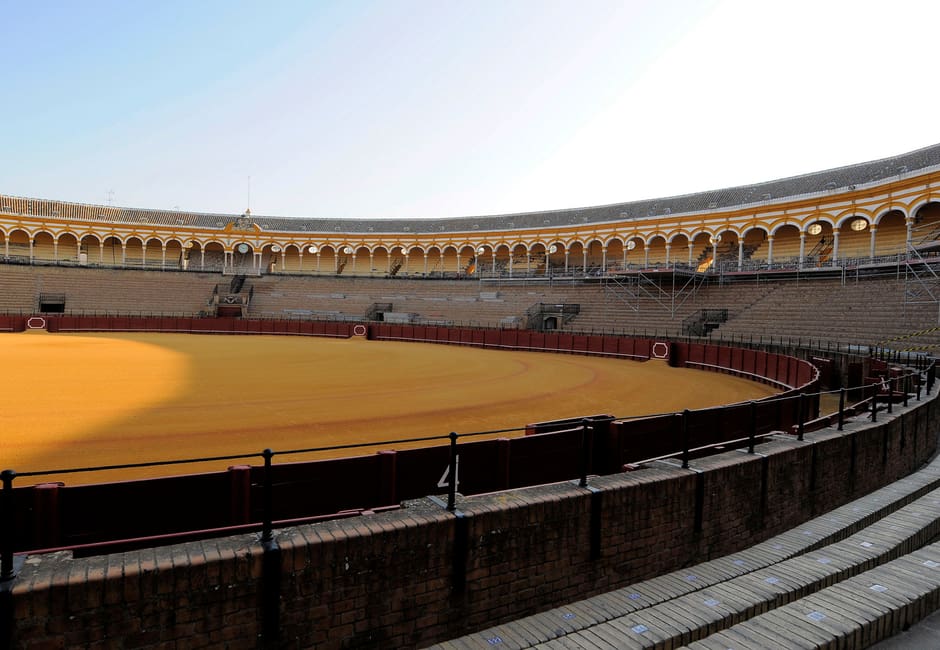
- Tickets for the Real Maestranza, if you want a bullfight. The Feria guide says the season opens on Easter Sunday and the “farolillos” cycle runs to the last day of the Feria. The Sunday before the Feria is the Exhibición de Enganches at the Real Maestranza. Tickets are sold at the official box office and through the tourist office.
What else is on
Outside the processions, the monuments keep special Holy Week hours. The tourist office links a page of them, and one for TUSSAM and Metro timetables. The Seville Cathedral publishes its own visiting hours, and they can change for worship and cultural events, so check them for the day you plan to go. Its general ticket costs 13 euros online and 14 at the ticket office, and the visit is estimated at 75 minutes. The cathedral and the Alcázar are covered in Alcázar vs cathedral, and the rest of the city in things to do in Seville. During Lent and Holy Week the tourist office points to traditional dishes such as torrijas, pestiños, potaje de vigilia and bacalao. The events page lists dated events as they’re confirmed, and Seville travel tips covers the practical basics.
Frequently Asked Questions
What day is Semana Santa 2027?
Semana Santa 2027 runs from Palm Sunday, 21 March, to Easter Sunday, 28 March. Holy Thursday is 25 March and Good Friday is 26 March, so the Madrugá falls on the night between them.
What is Semana Santa in Seville?
It’s Holy Week, when 60 brotherhoods carry their pasos from their home churches through the old town to the cathedral and back. You’ll see hooded nazarenos, floats carried by costaleros and saetas sung from balconies.
What is the schedule for the processions?
The Consejo de Hermandades approves the order of passage through the Carrera Oficial for each day and publishes exact times in its “Horarios y Recorridos” section. The day-by-day order for 2027 is in the table above.
When is the Feria de Abril 2027?
The Feria de Abril runs from Tuesday 13 to Sunday 18 April 2027. The fair ends at midnight on the Sunday with fireworks over the Guadalquivir.
Where is the Feria de Abril held?
It’s held at the Real de la Feria in Los Remedios, on the Feria de Abril fairground. Metro Line 1 stops at Plaza de Cuba, Parque de los Príncipes and Blas Infante, and the tourist office advises against driving.
What to do in Seville during Holy Week?
Follow a brotherhood near its home church or along the Carrera Oficial, and plan around the monuments’ special Holy Week hours. The things to do in Seville guide covers the rest of the city.
What is going on in Seville in April?
The Feria de Abril takes over the fairground from 13 to 18 April 2027. The Real Maestranza bullfighting season also runs through the Feria week, and Semana Santa ends in March.
Should you avoid Seville during Holy Week or the Feria?
That depends on what you want. The centre is busy with processions and hotels in the areas above book early, so fix your room as soon as your dates are firm. If you’d rather skip the crowds, the dates in the table above show which weeks to avoid.
Places in this guide
Photos show the actual places, licensed under Creative Commons and credited to their photographers.
Find hotels in Seville
Browse live availability and compare prices for your dates.
See hotels near Seville on Booking.comPrices are for the night of Saturday 28 November. You can change the dates on Booking.com. If you book, Roam Seville earns a small commission from Stay22 at no extra cost to you.